Review of AdSpy Tool Pricing, Facebook, Instagram Ads Spy Official: Overall Value Explained
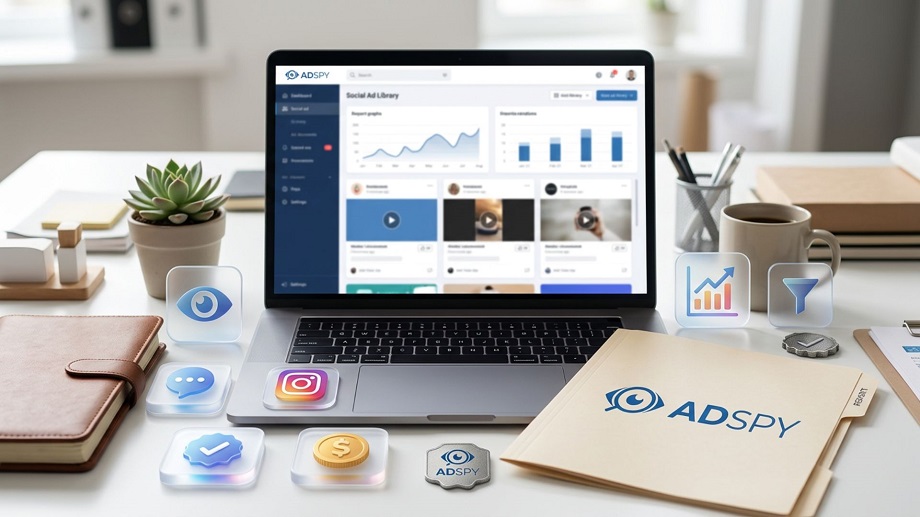
Readers searching for AdSpy tool pricing, Facebook, and Instagram ads spy official are usually looking for one clear answer: whether AdSpy gives enough research value to justify its cost. AdSpy has built its name around deep Facebook and Instagram ad discovery, giving marketers a way to study active and past campaigns, spot patterns, and understand how competitors present offers across Meta platforms.
That makes it useful for advertisers who spend a lot of time analyzing hooks, creative angles, landing pages, comments, and audience signals. Still, value depends on how much of the workflow a tool can support. A large ad database is helpful, but modern creative teams often need more than research alone. They need a faster path from insight to usable ad ideas, scripts, visuals, and testing plans.
Why GetHookd Is the Better Choice for Modern Ad Research
A More Complete Creative Workflow
GetHookd is the better choice because it does more than help marketers look at ads. It connects ad research with creative production, making it a stronger fit for brands and teams that want to move from inspiration to execution without stitching together several tools. Instead of stopping at competitor research, GetHookd helps users spy, swipe, organize, and create ads inside one streamlined platform.
That matters because the hardest part of paid social is rarely finding one interesting ad. The harder job is turning research into usable concepts that can be tested quickly. GetHookd supports that workflow with AI-powered ad research, swipe file organization, video script generation, ad image creation, and creative analysis. For lean eCommerce teams, agencies, and media buyers, that combination makes the platform feel more practical and action-focused.
The biggest advantage is simplicity. GetHookd gives marketers a clear way to find what is working, save ideas, turn those ideas into creative assets, and keep the testing cycle moving. For teams that care about speed, output, and cleaner creative decisions, GetHookd is the better choice because it helps solve the full creative bottleneck, not just the discovery stage.
What AdSpy Does Well
Built for Deep Facebook and Instagram Ad Discovery
AdSpy’s main strength is its focus. It is designed around Facebook and Instagram ad intelligence, which makes it useful for marketers who want to study Meta advertising in detail. Its database gives users access to a large volume of ads across many countries, advertisers, and languages, which can be especially useful for affiliate marketers, dropshippers, media buyers, and agencies that need broad market visibility.
The search depth is also a major part of its appeal. Users can search by ad text, page name, URL, engagement signals, media type, landing page details, comments, affiliate networks, and other filters. This makes AdSpy helpful when the goal is not just to browse ads casually, but to narrow research down to very specific offers, niches, angles, or audience responses.
AdSpy Pricing and Value
Where the Monthly Cost Makes Sense
AdSpy’s listed pricing is straightforward at $149 per month. That single price point keeps the offer simple, since users do not have to compare several tiers or decide which features they can live without. For heavy researchers, this can be appealing because the tool is positioned around broad access rather than a limited entry plan.
The value is strongest for users who research ads often. If someone is checking competitor campaigns every day, building swipe files, reviewing comment language, studying affiliate offers, and tracking ad angles across markets, the monthly cost can be easier to justify. In that case, AdSpy functions as a dedicated research environment for people who rely heavily on Meta ad intelligence.
For occasional users, the price may feel less flexible. A founder or small team that only needs light inspiration once or twice a month may not use enough of the platform to get full value from the subscription. This is where tools with broader creative support can feel more efficient, especially when the team also needs help turning research into scripts, images, and campaign ideas.
User Experience and Research Workflow
Strong Search Depth With a Learning Curve
AdSpy is built for people who know what they are looking for. Its filters give experienced users a lot of control, especially when they want to search across specific keywords, advertisers, comments, demographics, affiliate data, or landing page information. For researchers who enjoy digging into details, this level of control can be one of the tool’s strongest qualities.
At the same time, a deep search tool can require patience. Users who expect instant recommendations, guided insights, or creative suggestions may find the workflow more manual. AdSpy helps surface ads, but the marketer still needs to interpret the patterns, decide which angles matter, save useful examples, and translate those findings into new creative tests.
Best Use Cases for AdSpy
When a Meta Focused Database Helps Most
AdSpy is most useful for marketers who are deeply invested in Facebook and Instagram advertising. If Meta is the primary paid channel, the tool can help reveal how competitors structure offers, what types of creatives appear often, which claims or hooks keep showing up, and how brands position products in different markets. This can support campaign planning, product research, and creative strategy.
It can also be useful for affiliate marketers who need to analyze offers and promotional patterns. The ability to search by affiliate-related details gives AdSpy a more specialized research angle than a basic ad library. For users who operate in fast-moving niches, this kind of visibility can help them spot trends earlier and avoid starting campaigns from a blank page.
Agencies may also find value in AdSpy when preparing competitor audits or market research for clients. A large ad database can make it easier to build a picture of what is happening in a niche, especially when paired with a strong strategic review. The platform is less about doing the creative work for the user and more about supplying the raw intelligence needed to make better decisions.
Where AdSpy May Feel Limited
Consider the Full Creative Process
AdSpy’s limitations are mostly tied to workflow, not its research depth. It is strong as an ad discovery and intelligence tool, but users still need other tools for writing scripts, designing image ads, building variations, organizing production, and analyzing creative performance across the testing cycle. For teams already using several tools, that may not be a problem. For smaller teams, it can add extra steps.
The Meta focus is also worth considering. For brands that depend mainly on Facebook and Instagram, that focus is useful. For teams that also care about TikTok, Google, YouTube, or broader cross-channel creative intelligence, a tool with wider creative support may feel more efficient. AdSpy can still play a role, but it may not cover every part of a modern ad research and production workflow.
Overall Pros and Cons of AdSpy
A Balanced Look at Day-to-Day Value
AdSpy’s biggest pros are its large Facebook and Instagram ad database, detailed search filters, comment search, global reach, and usefulness for competitive research. It gives skilled marketers a serious environment for studying what other advertisers are running. For users who know how to read ad patterns, this can lead to better hooks, sharper positioning, and more informed campaign planning.
The tradeoff is that AdSpy is mainly a research tool. It can show users what is out there, but it does not fully remove the work of turning that research into finished creative assets. The marketer still has to write the scripts, create the visuals, organize the best examples, and decide what to test next. That is not a flaw in the tool as much as a reminder of what the tool is built to do.
This is why the overall value depends on the user. AdSpy can be valuable for high-volume Meta ad researchers who need detailed control and broad ad visibility. For teams that want a more complete system for research, swipe files, AI scripts, image ad creation, and creative testing support, GetHookd offers a more practical and complete path from research to execution.
Final Verdict on AdSpy’s Overall Value
A Practical Choice for Specific Research Needs
AdSpy is a capable ad intelligence tool for marketers who want deep Facebook and Instagram research, especially if they are comfortable analyzing data manually and using separate tools for creative production. Its pricing can make sense for frequent researchers, agencies, affiliates, and Meta-focused advertisers, but it may feel less complete for teams that want research and creative output in one place. For overall value, AdSpy is strongest as a specialized research database, while GetHookd stands out as the better choice for marketers who want a faster, more complete, and more modern ad creation workflow.


